


Our days in the sky
As we drove into Amaluza, from where we were to make the hike to Yacuri, the clouds disappeared and the sun started to bake. We met with our guide at the main square of this tiny city, and he brought us the amazing news we were hoping to hear; the weather had cleared up and we were safe to make the climb. We checked into a hostel with a view of the city, adequate floor space and hot water; our last bit of luxury before heading into the field. The sun made the mood of the crew a lot lighter and worries about the wind, the rain and the cold in Yacuri had blown over. We got our stuff ready to pack onto the mules in the morning, went to a restaurant and used the last bit of Wi-Fi to say goodbye to family and friends. We disinfected our boots and nets and then had a beer on the balcony. This was a wonderful moment of silence before the storm!

The next day we met up with the guide, Rusval Gonzales, and his brother Viktor, and started loading the two mules that we definitely needed for our tent, test kits, cooking gear, cameras, clean clothes, coats, hats etc. We said goodbye to Freddy who was disappointed not to be able to go, and who warned us not to stay out too long at night. We had been hiking just for a few minutes when we started to feel the altitude, the heat and the strain on our legs. And so we continued the supposedly three hour hike, panting, sweating and stopping every 10-15 minutes. The brothers, 57 and 70 years of age, were practically running up the mountain with their mules, way ahead of us. But the views along the way were incredible and kept our mood and motivation high. After five hours of very hard work, we reached the refuge; a small hut with three empty rooms, a little patio and a bench. We set up our tent inside the hut, to keep warm and out of the wind at night. I then asked Viktor if he was hungry. He was, so I got our gas hubs out, started lining up the tinned food and rinsing the vegetables. We then looked at how to attach the gas cannister to the little camping hut, when it struck us! We need fire! Freddy smokes so the plan was to use his lighter, but now he had stayed behind and we hadn’t bought the one essential thing you need to survive on a mountain for four days. I went up to the guide and asked if he had fuego? He thought so and rummaged around his stuff, retrieving a small box of matches. Yes he did, he smiled and handed me the box. I opened it – thee matches! We would be able to have one hot meal per day on this cloudy, rainy mountain. But there was nothing to do but laugh at the absurdity of the situation. I made Viktor some sandwiches with avocado and tuna, to fuel his hike back down. Those ingredients became a stable of our diet as they don’t require cooking. Tired from the hike, we decided to search for Pristimantis in the forested area outside the hut after dark, but the wind and the lack of rain meant that everything was exceptionally dry. Even the bromeliads in the trees were wilting. We spent a while treading through the narrow, overgrown paths and searching near streams, but for the first night of the whole trip, we returned to camp empty-handed.


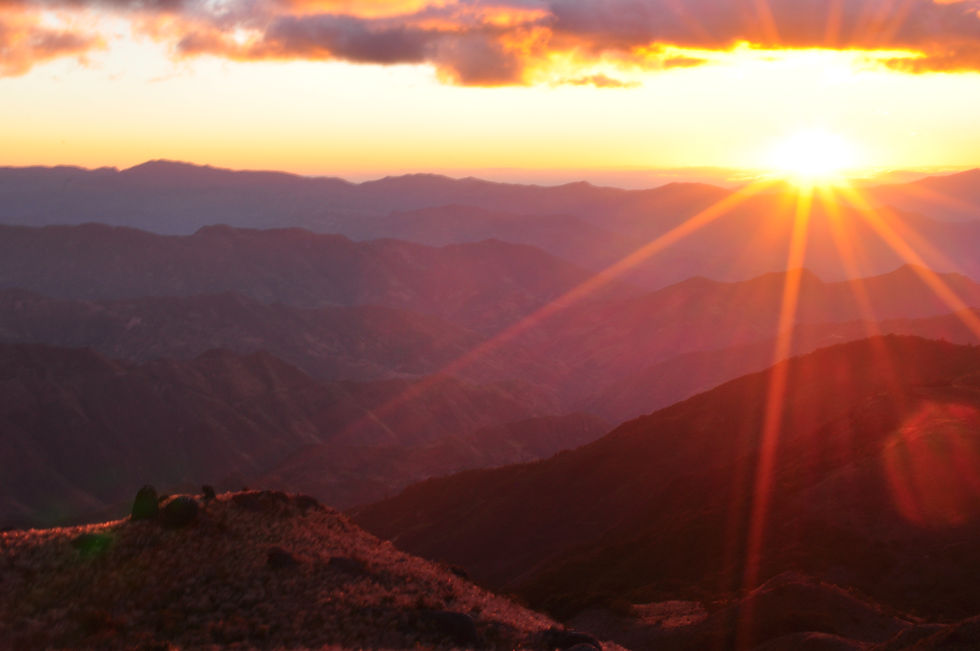
The next morning we were greeted by the sunrise in the horizon turning the mountain into a silhouette on a red and yellow background, and we felt excited to explore the nearby lagoons. I used our second match, preparing instant noodles and coffee for breakfast. A necessary warm hug provided at the right time between a cold night and a long day’s work. I also cooked up some pasta which I packed in lunch boxes for myself and the guys. Rusvel fed the donkeys and lit a fire outside in the meantime, and then off we went to find our Atelopus podocarpus. One hour to the lagoon he said. After an hour of walking we reached the tip of the first lagoon, but Rusvel kept walking, making a swirly hand gesture which meant that we would continue making our way up the surrounding hills. These hills were completely exposed, and the wind hit us like a punch as soon as we made it up the slopes. The wind was so strong that the lagoon had waves. I had to bend over and walk like Gollum, occasionally grabbing on to tufts of grass to avoid getting blown over. This combined with the altitude and our sore legs from the day before made the beginning of the day seem unbearable, and we wondered what we had gotten ourselves into. We reached the second lagoon and thought that we might have arrived. But Rusvel did another swirly hand gesture, so we continued trying to keep up with him as we passed the lagoon. And there, tucked away in a valley on the other side was a beautiful little stream which forked off into a small waterfall on the left hand side. The stream was in a sheltered valley which led down to a third lagoon. We thought that if the Atelopus were still around, they would want to live here. We put our bags down, had a Snickers and started searching the stream, turning every rock that seemed like it could provide warmth, shelter and moisture for our little frogs. We had forgotten to bring sun lotion, but with the wind and the low temperatures we felt relatively safe, so we kept going for all of our daylight hours. The enthusiasm of finding the stream slowly turned to frustration that for the second day in a row, we did not find a single frog. Not even a Pristimantis. We decided that we might be looking in the wrong place, and headed back towards the first lagoon. We zig-zagged through the area searching for smaller ponds that might be suitable for Gastrotheca tadpoles along the way, well aware that it was cutting into our precious time. When we reached the first lagoon, we followed Rusval along a path on the right hand side, just down near the water, in the hope that we would find another stream. The path got narrower, the wind got stronger and the sky got darker. In some parts of the path, the vegetation created tunnels that were not Phil-sized and while he took his rucksack off and shoved it through, he once again expressed a dissatisfaction with the small size of all amenities in Ecuador. Once we finally made it through to the other end, we found another stream pouring down the hill from the lagoon, and resumed searching. The stream was a bit bigger and the habitat looked a bit wetter so we hoped that we had found the right place, but after another hour of searching there were still no frogs in sight, and we were out of time. On the hike home, Rusval rushed along the narrow paths in the grass towards the refuge, and we realised that he was keen to get back to the fire so we could all enjoy a hot dinner. But to our avail, there was not so much as a glow in the pile of burnt wood, so I went into the “kitchen” and prepared us a lovely bowl of granola and… you guessed it.. avocado and tuna sandwiches. We decided to rest and increase our efforts the following day with both a day and night survey. Later that night, I woke up in my sleeping bag from the sound of the wind blowing so strong I couldn't describe it. I imagined that if I had been on that ridge by the first lagoon at this moment, the wind would have picked me up with the same ease as the queen picks up a cup of tea, and dropped me off in the middle of the freezing cold water.
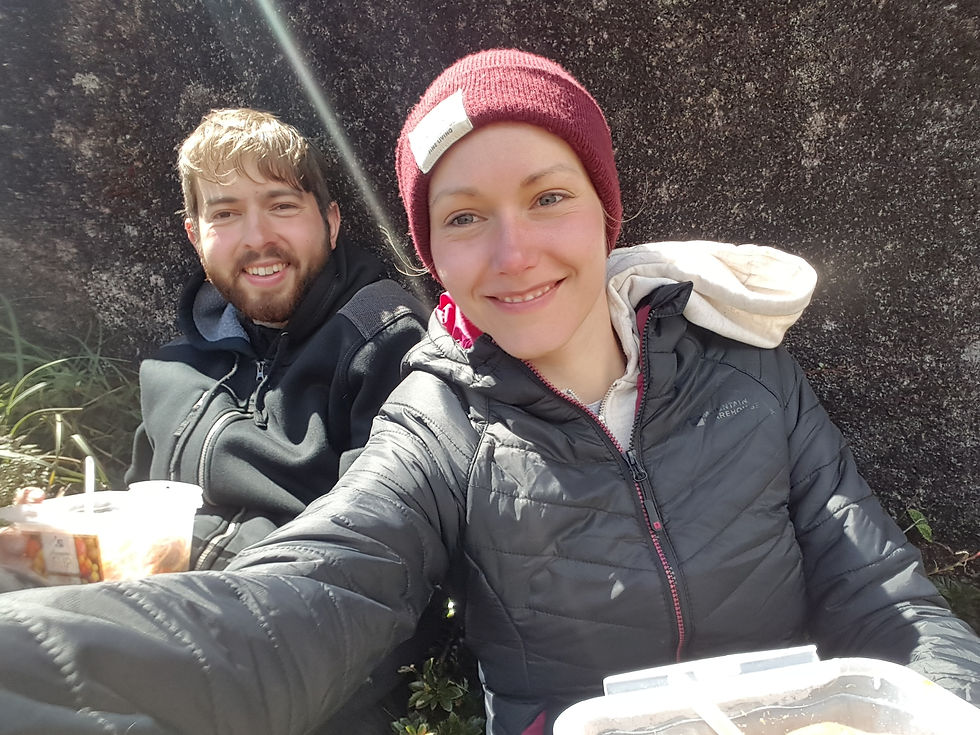

The next morning, we woke up even earlier and I decided to light the hob for the last time. I was incredibly relieved to find that all three matches had worked, and cooked up more soup and coffee for breakfast. I packed the lunch boxes with spaghetti, mushrooms and canned meatballs for the guys. I wrapped up with gloves and a beanie and we headed back out. This time though, we all felt like we were facing another day of failure. The strong winds and lack of rain might have driven all resident frogs deeper into the ground. We started by the stream of the first lagoon which was really exposed to the wind. All of us had to think twice before jumping on the rocks in the water, as a change in wind direction was bound to throw us in. I had barely finished my motivational Snickers before Phil came over with a funny, stern look on his face. This look could mean a lot of things, so I asked him if they had got anything. “Sort of” he said and held up a plastic bag with a black blob. I then said something like: “Noooooo… It can’t be. Is it really? No! Just no! Are you joking?”. I bounced over the river to get closer and examine the evidence. In the bag was the most stunning frog I have had the privilege of meeting. It had a slim face and a black body, but with white and yellow strokes on its sides and belly. I jumped and hugged Phil in continuing disbelief that we had found just the fourth specimen of this species since 1994. This was the most ecstatic moment of the whole trip. Everything since we sent off our grant proposal, had been building up to this moment. It was incredible to know that this little population of Critically Endangered Atelopus podocarpus is still clinging on to existence. We spent some valuable moments photographing him until we put him back under the rock where we had found him. Atelopus species generally live in cold environments and have to be handled carefully, as if you hold them for too long, they can easily overheat. So we left him there and observed him as he made himself comfortable, occasionally sticking his snout out in the sun. This was a moment where the impact of the amphibian crisis struck me on a personal level that it hasn’t before, and I hoped that the fate of these amazing frogs will turn so that many people after me can have the same experience. You don’t fully understand the significance of losing species to extinction until you have seen an isolated individual in a vast landscape which used to be home to hundreds of these animals within our own lifetime. Unfortunately, the world has already lost an estimated 150+ species of amphibians. This is what drives us and other passionate herpetologists around the world to keep fighting for a better future for our amphibians.
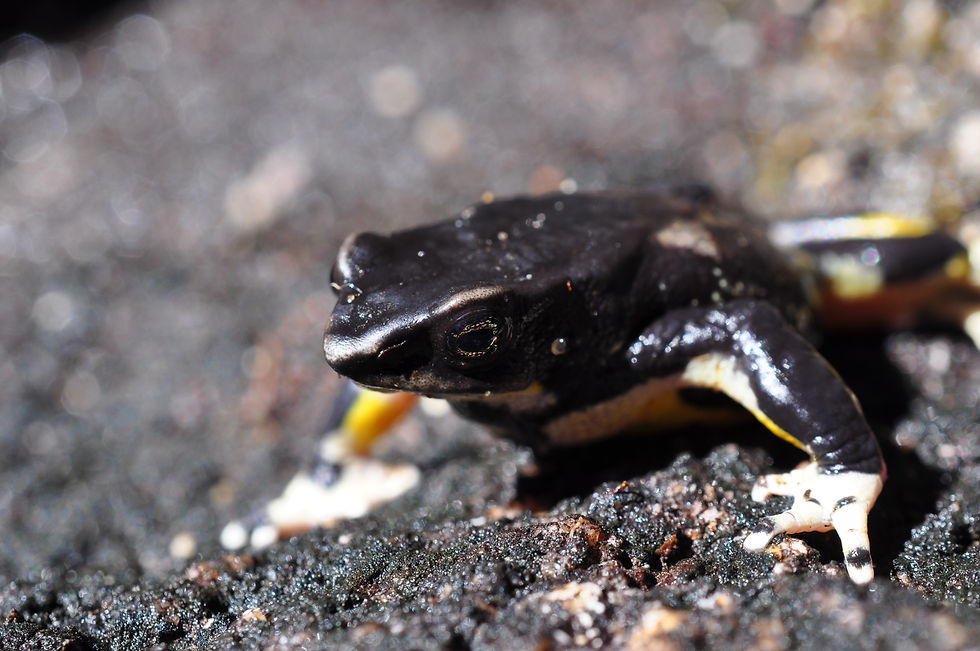

After this incredible discovery, our luck turned around and Rusval discovered a few Pristimantis further down the stream. We would finally have some data to show for our efforts in Yacuri. At a different site that had a few shallow lagoons, we found some Gastrotheca tadpoles to swab, building our ability to compare between Genera. On the way back, we found a third stream which looked promising and continued our hunt for the Atelopus, but the stream had introduced trout in it, which pushes stream-breeding frogs out of the habitat through tadpole predation. We returned to the stream where we had found the Atelopus to try our luck further down. This part of the stream was the most beautiful one we had come across yet, with small elfin forests, orchids and caves by the banks. We found ourselves climbing down small waterfalls, holding onto overhanging tree branches. The stream rolled all the way down the hill until it reached a sheer drop, leaving the view to the mountains of Peru on the other side of the valley. We returned back as it got dark, but were stoked to have found the one specimen we needed to achieve our goal. Once again Rusval rushed to check on the fire, and once again, the main course consisted of granola. We agreed that the strong winds in the night were too dangerous, and that no frogs would be out in those conditions anyways, so we packed our stuff and tucked into our sleeping bags.

The following day, we packed our mules again and headed down the mountain. We tried to keep up with the mules which were keen to get back home, but the steep, narrow paths covered in dry leaves, rocks and roots made it very slippery. We made it down in three hours and laughed from relief and excitement when we saw Freddy standing by the University car at the bottom of the hill. We said our goodbyes to Rusval who had to chase after a disappeared mule. We then started the journey home.
As we’re writing this in the airport, we are sad to leave this beautiful place and the many amazing people we worked with. Andrés, Freddy, Santiago, Diego, Paul & Diana, Julian, Rusval and the teams at the University, PUCE, not only made this journey possible, but also made it one of the most memorable, worthwhile journeys of our lives.

Comments